Category:
Main Courses, Side Dishes
Seasons:
December, November, October, September, May, April, March, February, January
Courtesy of Daniel Klein
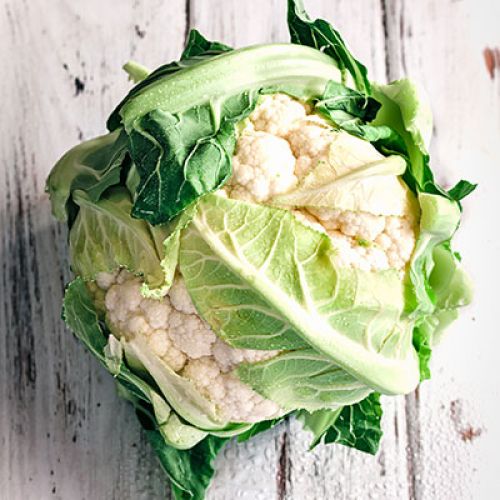
Additional Tip: Any recipe for regular cauliflower will work for Romanesco, but look for recipes that showcase the florets (i.e., not soup).
For 1 Person(s)
1 head of cauliflower
canola oil
salt
thyme
1 whole garlic cloves
1/2 stick of butter, cut into chunks
1 cups pine nuts
4 anchovy filets, diced (the higher the quality the better; rinse salt-packed or brined anchovies before dicing)
1 handful golden raisins
olive oil
1 lemon, juiced
shaved Parmesan
Browned and Dressed Romanesco Cauliflower Directions
Cut one head of cauliflower in half, remove stem and cut florets into bite-size pieces.
Place a pan with a large surface area on high heat with canola oil covering the bottom. Before the oil starts to smoke, add the cauliflower to the pan. The cauliflower can cover the bottom of the pan but should not be squished in or stacked. Each piece should be touching the pan enabling it to caramelize. Add plenty of salt.
After three minutes or so, flip a piece of cauliflower to see if it has turned golden brown. If it has, stir and flip the florets so they slightly brown on all sides. At this point, toss in a few springs of thyme and a couple whole cloves of garlic. Add ½ stick of butter cut into chunks and continue cooking stovetop (or transfer oven-safe pan into a 400° oven for about 15 minutes).
While the cauliflower is cooking, place a cup of pine nuts in a pan, sprinkle with salt and brown over low heat. Dice four anchovy filets, the higher the quality the better (rinse salt-packed or brined anchovies before dicing).
The cauliflower is ready when it meets little resistance from a knife, but well before it is mush. Remove the garlic and thyme and transfer cauliflower to a platter.
In a mixing bowl, add the pine nuts, anchovies, a handful of golden raisins, a few glugs of olive oil and the juice of a lemon. Taste, adding salt if necessary, pepper if you like, and pour over cauliflower. Top with shaved Parmesan and serve warm.